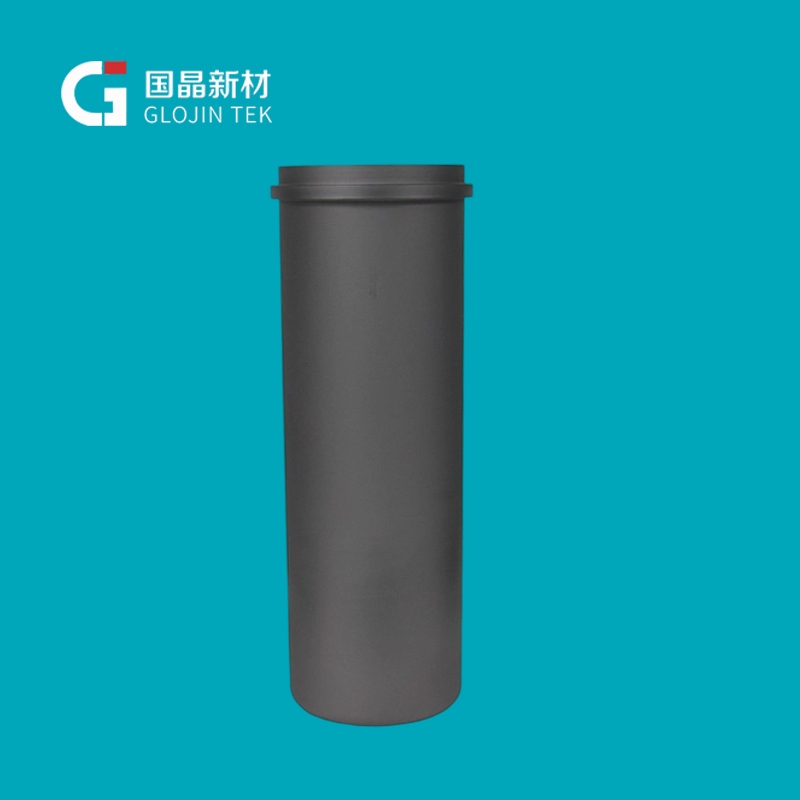
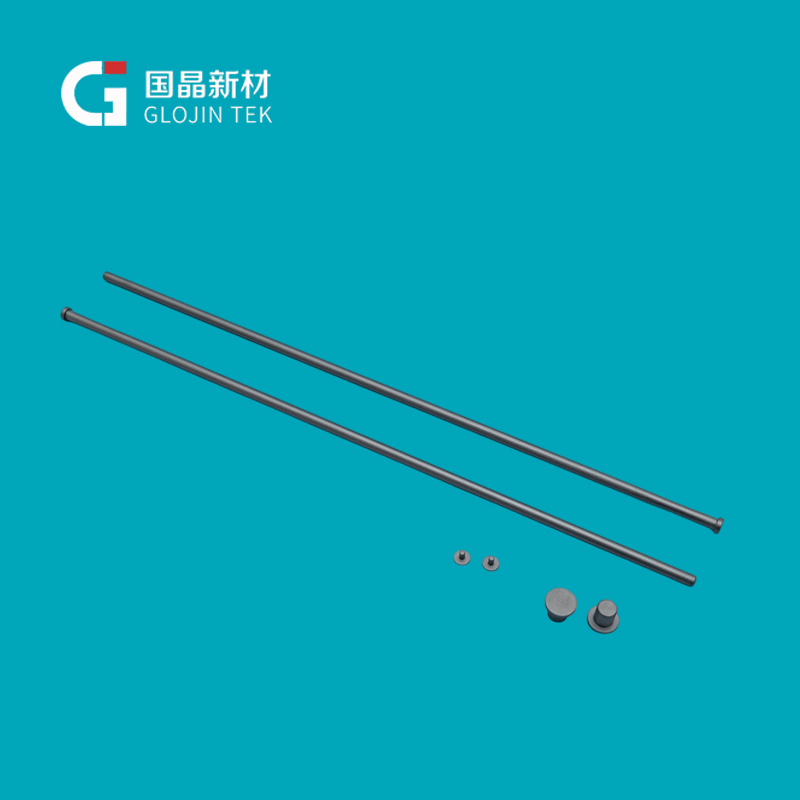
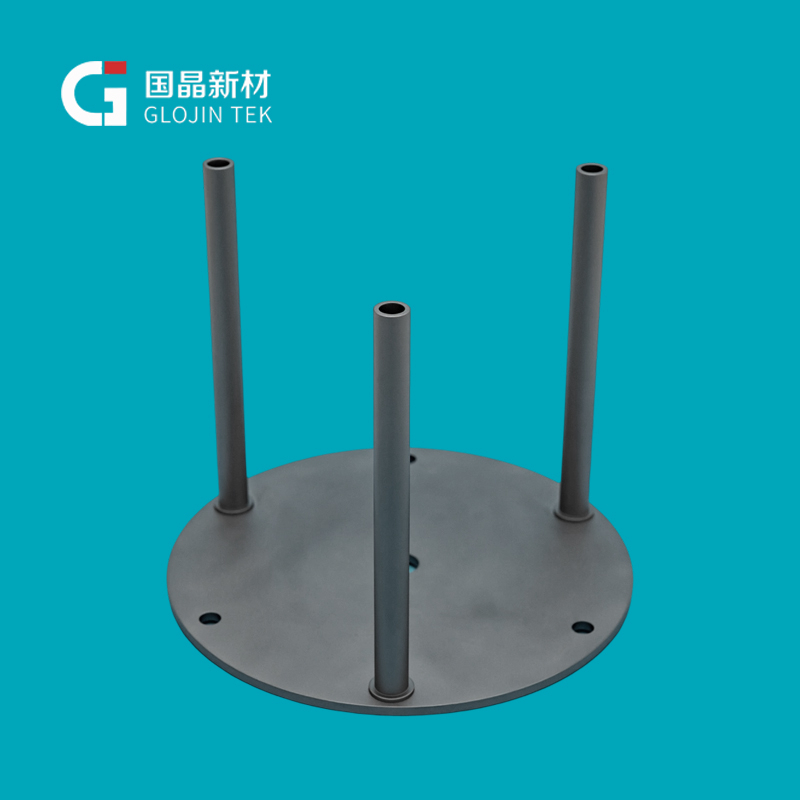
Pyrolytic graphite (PG) coating is a high-purity graphite film or dense graphite layer formed on the surface of a substrate by chemical vapor deposition (CVD), providing excellent thermal conductivity, chemical stability, and high-temperature resistance.
Characteristic
High Purity: Dense, pore-free surface with no impurity release at high temperatures.
Excellent High-Temperature Resistance: Strength increases with temperature, reaching a peak at around 2750°C, and sublimates at approximately 3600°C.
Outstanding Thermal Shock Resistance: Low elastic modulus, high thermal conductivity, and low thermal expansion coefficient.
Excellent Chemical Stability: Resistant to acids, alkalis, salts, and organic reagents.
Parameter
Property
Unit
Value
Purity
—
99.999%
Flexural Strength
N/mm²
127
Thermal Conductivity (200°C)
W/(m·K)
376 (a); 2.0 (c)
Thermal Expansion Coefficient (50–800°C)
K⁻¹
1.26×10⁻⁶ (a)
Electrical Resistivity
Ω·cm
2×10⁻⁴
Maximum Service Temperature
°C
3600
Application field solutions
Semiconductor Wafer Carrier Coating: Forms a dense protective layer on carrier surfaces, preventing direct contact with wafers and reducing scratches, metal ion contamination, and particle contamination.
Critical Semiconductor Equipment Component Coating: Applied to surfaces of CVD chamber liners, ion implantation chambers, and high-temperature annealing furnace components.
Filter Coating Deposition Applications: Used in vacuum evaporation coating systems, it exhibits excellent stability under high-temperature and high-vacuum conditions without releasing impurities or causing outgassing, thereby ensuring high film purity and consistent coating quality.
Atomic Absorption Spectroscopy Equipment: Used as a pyrolytic graphite-coated graphite tube in atomic absorption spectrometers, offering improved resistance to oxidation and chemical corrosion compared to standard graphite tubes.