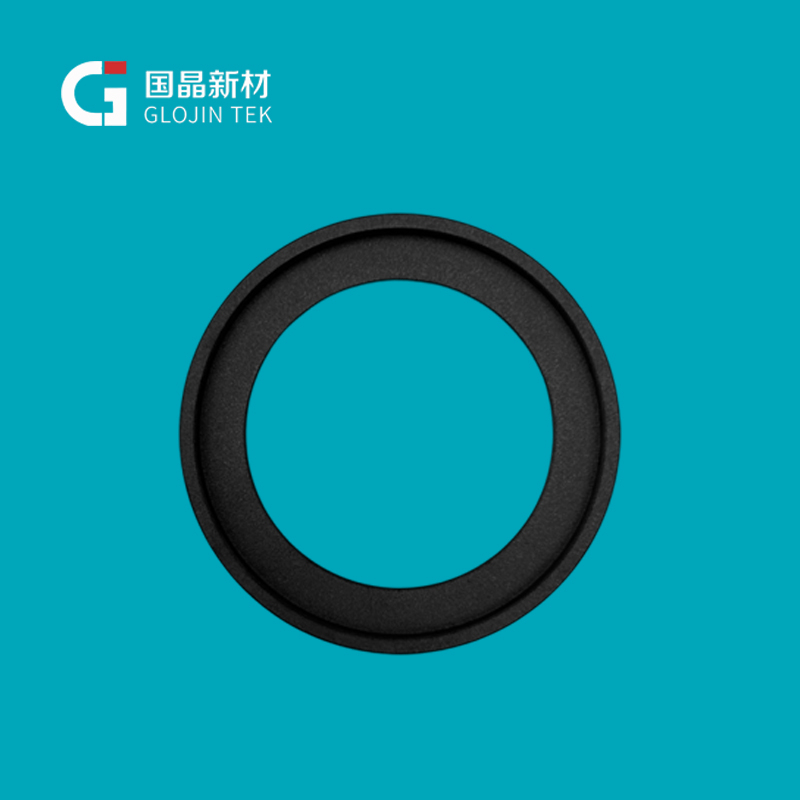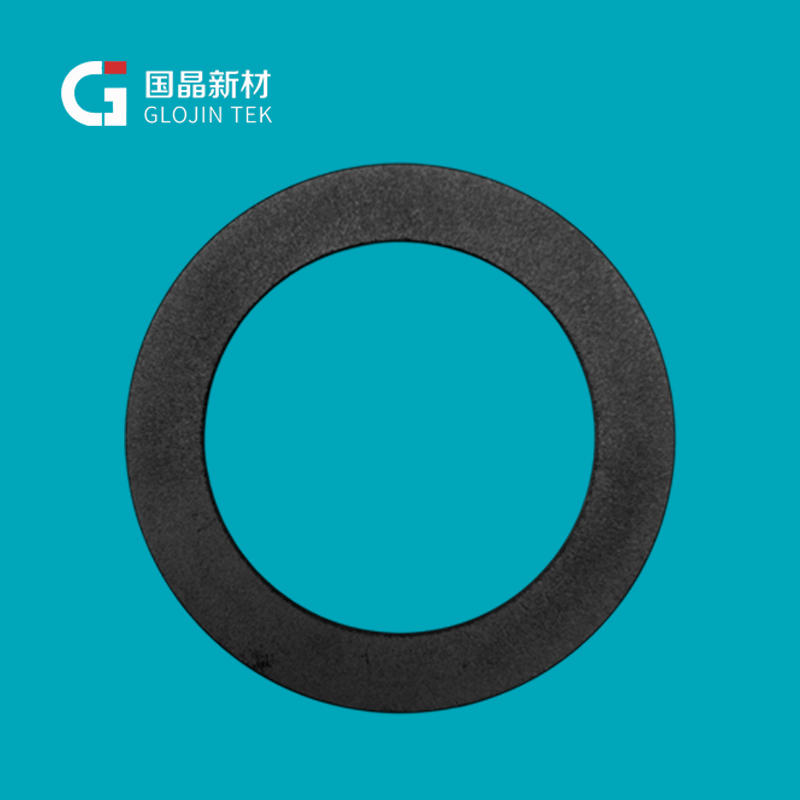
High Purity and Density: The CVD process enables precise control of composition and microstructure, resulting in pyrolytic boron carbide with significantly higher purity and density compared to conventional sintered or hot-pressed boron carbide.
Excellent Mechanical Properties: It is one of the hardest known materials in nature, second only to diamond and cubic boron nitride (CBN). The CVD process further refines its microstructure (e.g., fine grains and defect-free structure), resulting in superior mechanical performance.
Outstanding High-Temperature Stability: Its stable trigonal crystal structure and dense microstructure enable reliable performance under extreme high-temperature environments.
Excellent Chemical Inertness: It exhibits strong chemical stability and excellent resistance to most strong acids, alkalis, molten metals, and corrosive gases.
| Property | Unit | Value |
| Density | g/cm³ | 2.52 |
| Lattice Constant | Å | a=2.5, c=4.3 |
| Flexural Strength | MPa | 400 |
| Elastic Modulus | GPa | 450-470 |
| Thermal Conductivity | W/(m·K) | 42 |
| Coefficient of Thermal Expansion | mm/mm/K | 5×10⁻⁶ |
| Resistivity | Ω·cm | 0.1-10 |
| Vickers Hardness | GPa | 38 |
| Melting Point | °C | 2450 |
Plasma Etching Equipment: Used as a replacement for silicon carbide (SiC) etch rings in plasma etching systems.