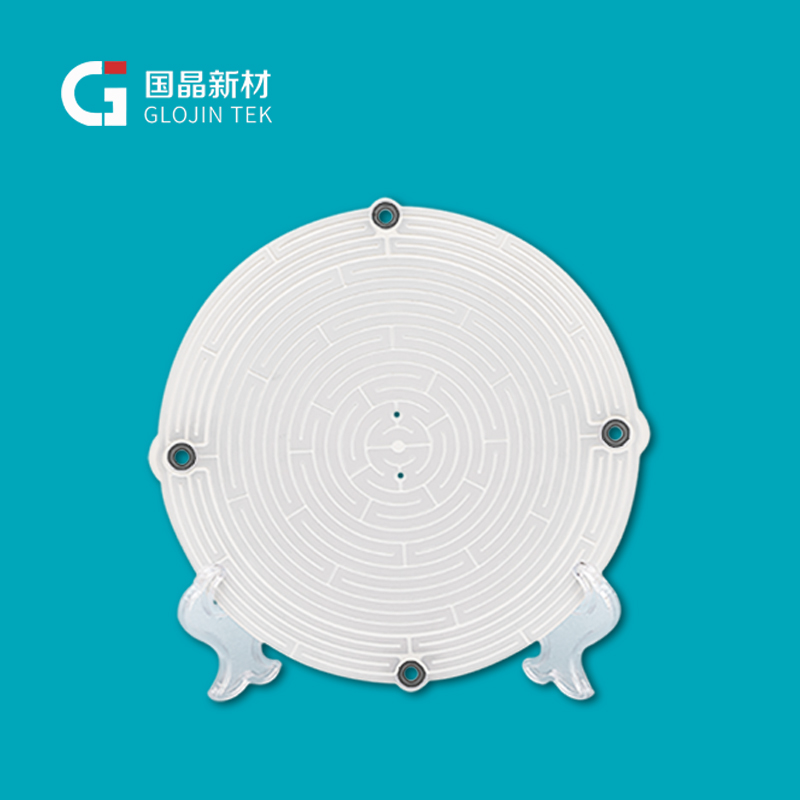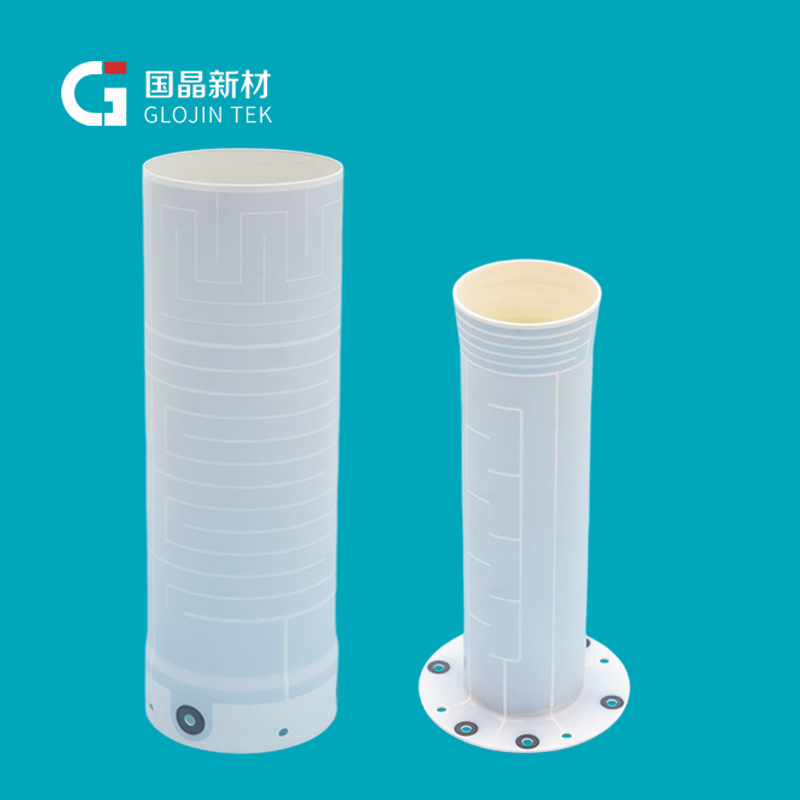
Excellent Chemical Stability: Resistant to acids, alkalis, salts, and molten materials.
Flexible Structural Design: Supports complex and customized geometries.
Superior Thermal Performance: Fast heating, high thermal shock resistance, and excellent temperature uniformity.
High Purity & Low Outgassing: CVD-fabricated for ultra-clean operation in UHV environments.
| Index | Unit | Value |
|---|---|---|
| Purity | % | ≥99.999 |
| Heating Rate | ℃/min | Up to 200 |
| Insulation Resistance | MΩ | >500 |
| Chemical Stability | / | Acid and alkali resistant, corrosion resistant |
| PG Conductive Layer Thickness | um | 20-100 |
| PBN Insulation Layer Thickness | um | ≥100 |
| Theoretical Maximum Temperature | ℃ | 1700 |
| Temperature Uniformity (Plate Type) | ℃ | ± %/ ℃ |
OLED Evaporation Deposition: Provides substrate heating for OLED panel manufacturing, ensuring uniform temperature distribution and protecting sensitive organic light-emitting materials.
Thin-Film Solar Cells: Used for substrate preheating and temperature control in CIGS solar cell production, improving crystal quality and enhancing photoelectric conversion efficiency.
Molecular Beam Epitaxy (MBE): Heats substrates under ultra-high vacuum conditions to enable high-quality epitaxial growth of semiconductor thin films.
Wafer Thermal Processing: Serves as a heating platform for wafer processing in semiconductor equipment such as CVD and ALD systems, delivering precise temperature control for thin-film deposition and thermal treatment processes.