In semiconductor manufacturing, temperature often determines the success or failure of a process.
Whether it is OLED evaporation, perovskite solar cell fabrication, MBE (Molecular Beam Epitaxy), or wafer thermal processing techniques such as CVD and ALD, temperature uniformity and thermal field stability directly impact thin film quality, material properties, and final product yield.
Therefore, as one of the core components of thermal field systems, heater performance is receiving increasing attention from equipment manufacturers and end-users alike.
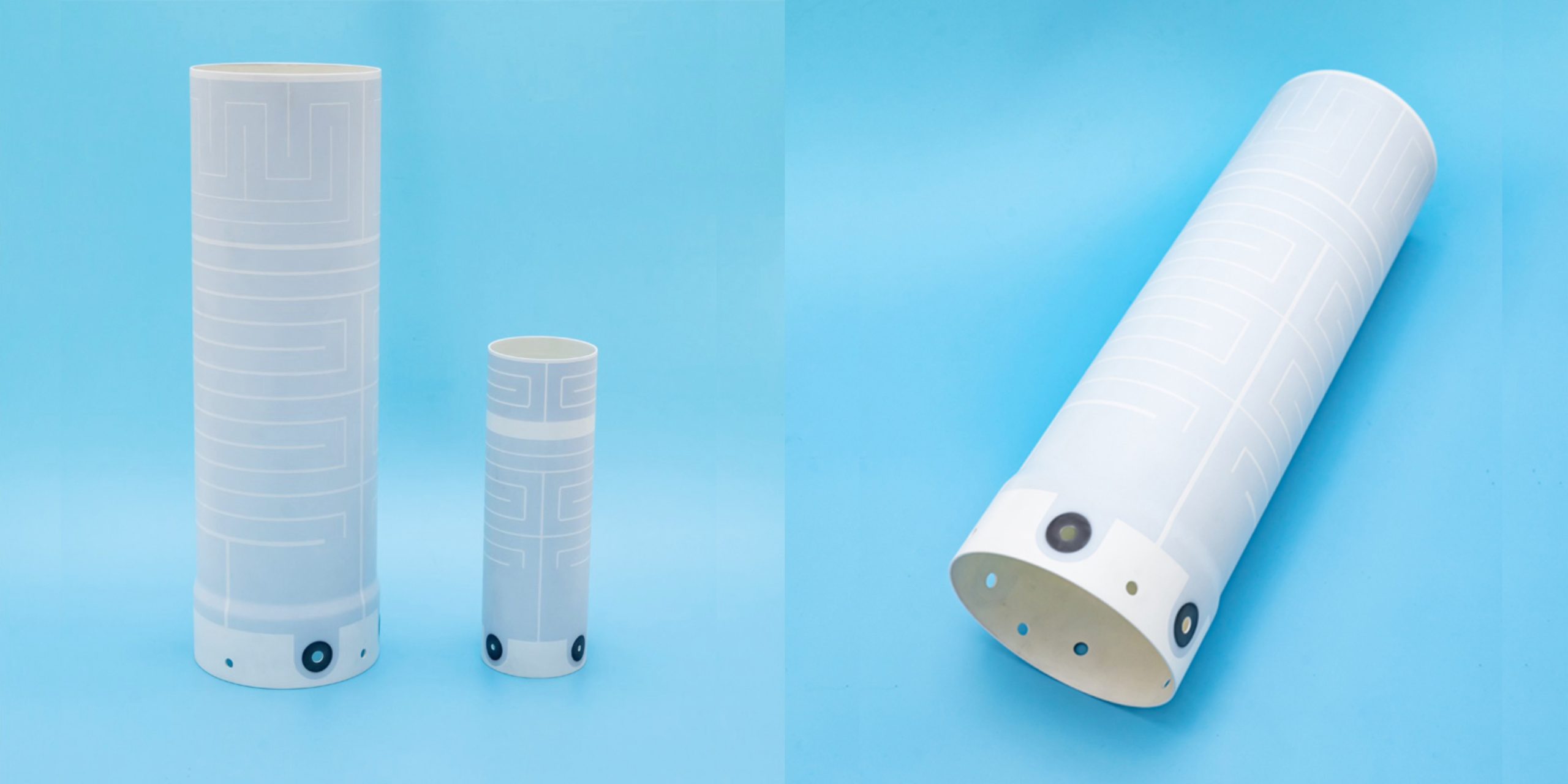
PBN/PG Composite Heater (Cylindrical)
What Problems Arise from Temperature Non-Uniformity?
In high-temperature process environments, uneven thermal field distribution or excessive local temperature differences can lead to: non-uniform thin film thickness, fluctuations in material deposition rates, degraded crystal growth quality, poor product consistency, and reduced yield.
As advanced manufacturing processes continue to evolve, equipment demands for temperature control precision are constantly increasing. Traditional heating solutions are increasingly unable to meet the requirements of advanced processes in certain high-temperature, high-vacuum, and high-cleanliness environments.
How Do PBN/PG Composite Heaters Improve Thermal Field Performance?
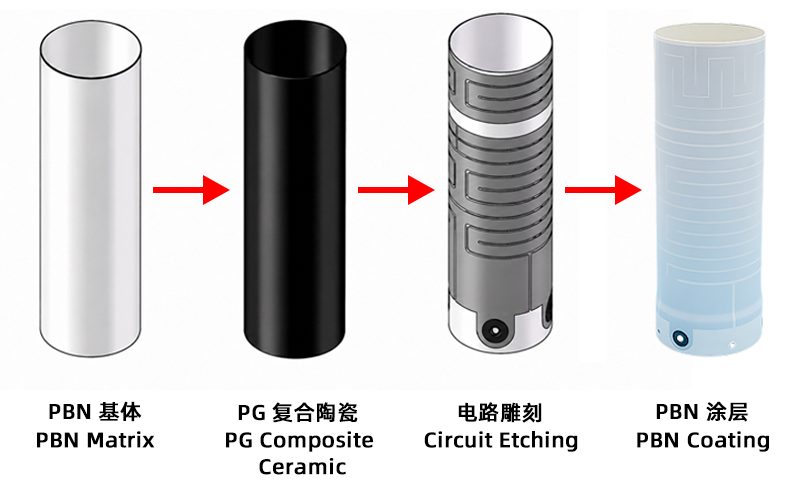
PBN/PG composite heaters are manufactured using Chemical Vapor Deposition (CVD) technology, combining the advantages of Pyrolytic Boron Nitride (PBN) and Pyrolytic Graphite (PG) to achieve an integrated design of heating and insulation functions.
PBN/PG Composite Heater Fabrication Process
Wherein:
PG (Pyrolytic Graphite) Layer: Exhibits excellent electrical conductivity and thermal conductivity properties, serving as a high-efficiency heating layer that delivers rapid response to heating demands.
PBN (Pyrolytic Boron Nitride) Layer: Features high purity, excellent electrical insulation, high-temperature resistance, and corrosion resistance, providing stable insulation protection for the heating layer.
Through the multi-layer composite structural design, the product maintains stable operation in high-temperature environments while achieving more uniform thermal field distribution.
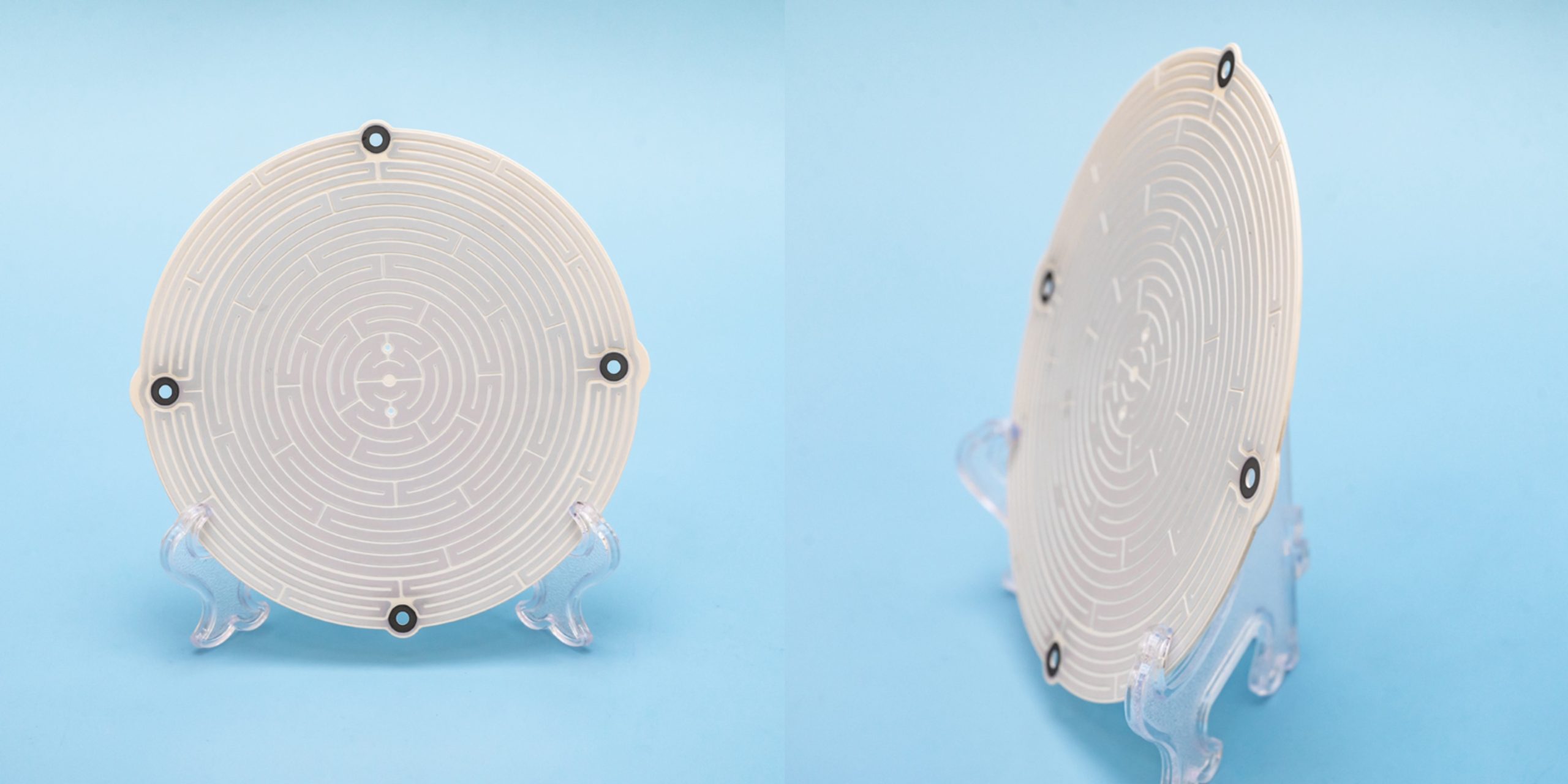
With exceptional thermal field uniformity, high purity, and long-term stability, PBN/PG composite heaters have been widely adopted across multiple advanced manufacturing sectors:
OLED Evaporation: Provides substrate heating and uniform temperature control for OLED panel production, helping protect organic light-emitting materials and improving evaporation quality.
CIGS Thin Film Solar Cells: Enables substrate preheating and precise temperature control to promote material crystallization and enhance photoelectric conversion efficiency.
MBE (Molecular Beam Epitaxy): Delivers stable heating conditions under ultra-high vacuum environments to ensure the growth quality of epitaxial thin films.
Wafer Thermal Processing: Suitable for semiconductor equipment including CVD and ALD, providing uniform thermal fields for wafers to achieve precise temperature control and stable processing.
As the semiconductor, display panel, and new energy industries continue advancing toward higher precision and reliability, the importance of thermal field systems continues to grow.
As one of the core thermal field components for high-end equipment, PBN/PG composite heaters—with their high purity, excellent temperature uniformity, and stable long-term operation performance—are becoming the preferred choice for an increasing number of advanced manufacturing equipment.