In vacuum evaporation coating processes for SAW (surface acoustic wave) filters, evaporation crucibles—including PBN organic EL crucibles and graphite crucibles—are critical components of the evaporation source. They are used to hold evaporation materials and enable stable evaporation in a high-temperature vacuum environment, allowing vaporized molecules to deposit uniformly on the substrate surface and form the functional thin films required for SAW filters.
Crucible quality directly affects source material lifetime, purity, process stability, and final film quality. Therefore, both material properties and structural design are critical considerations when selecting an evaporation crucible.
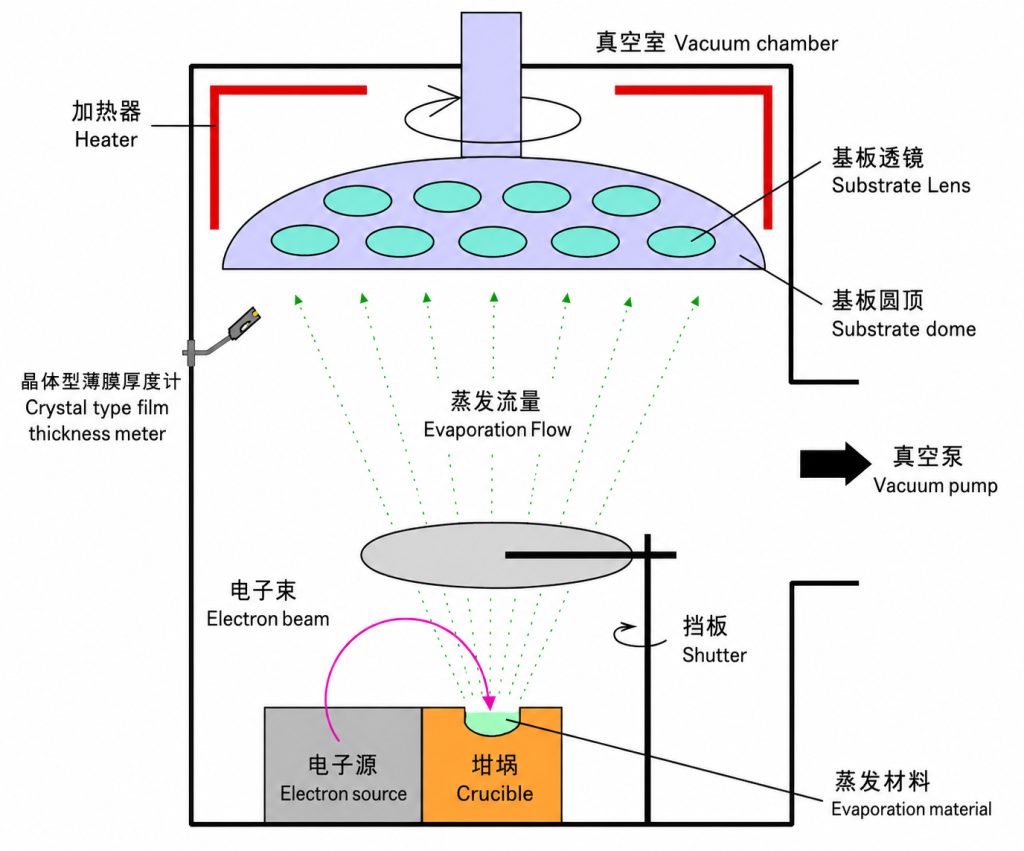
SAW filter evaporation processes are typically carried out under high-temperature, high-vacuum conditions. If a crucible lacks sufficient purity or density, it may release impurities or outgas during operation, contaminating the evaporation material and compromising film purity. Uneven thermal conductivity can also cause localized overheating, affecting evaporation stability and final film quality.
A high-performance evaporation crucible should therefore provide high purity, low outgassing, excellent vacuum compatibility, and reliable thermal conductivity to meet the stability requirements of SAW filter thin-film deposition.
Glojin offers two composite crucible structures designed for different evaporation processes:
These structures address varying requirements for purity, thermal conductivity, and overall process performance in vacuum evaporation.
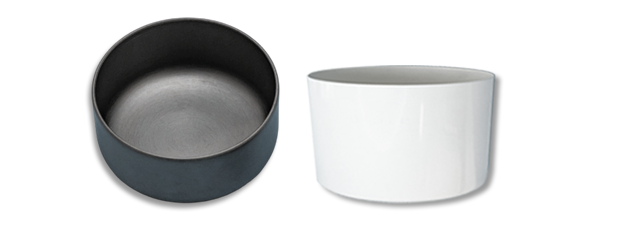
This crucible features a high-density PBN substrate with high mechanical strength and enhanced crack resistance, helping extend its service life. A high-purity PG coating is deposited on the PBN substrate surface.
Both the PBN substrate and PG coating are produced by CVD and can achieve a purity of up to 99.999%. The composite structure offers resistance to acids, alkalis, salts, and organic reagents. Its anisotropic properties, low outgassing at elevated temperatures, excellent vacuum compatibility, good gas tightness, chemical stability, and thermal conductivity make it well suited for demanding vacuum evaporation processes.
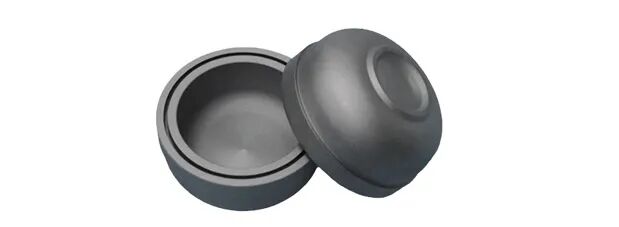
This crucible uses high-purity graphite as its substrate, with imported high-purity graphite selected where required. The PG coating is securely bonded to the graphite substrate, supporting long service life.
The graphite substrate provides good thermal conductivity and mechanical strength, along with resistance to acids, alkalis, salts, and organic reagents. The PG coating helps reduce potential impurity release from the graphite under high-temperature vacuum conditions, improving the stability of the working surface.
Different evaporation processes place different demands on crucible performance. In practical applications, the most suitable composite structure should be selected according to the equipment configuration, evaporation material, and specific process requirements.
| Comparison | PBN Substrate with PG Coating | Graphite Substrate with PG Coating |
|---|---|---|
| Substrate | Pyrolytic Boron Nitride (PBN) | High-Purity Graphite |
| Working Layer | Pyrolytic Graphite (PG) | Pyrolytic Graphite (PG) |
| Advantages | Ultra-high purity, low outgassing, excellent vacuum performance | Good thermal conductivity, excellent overall performance, long service life |
| Typical Applications | Processes with stringent purity and stability requirements | Processes requiring high thermal conductivity and overall performance |