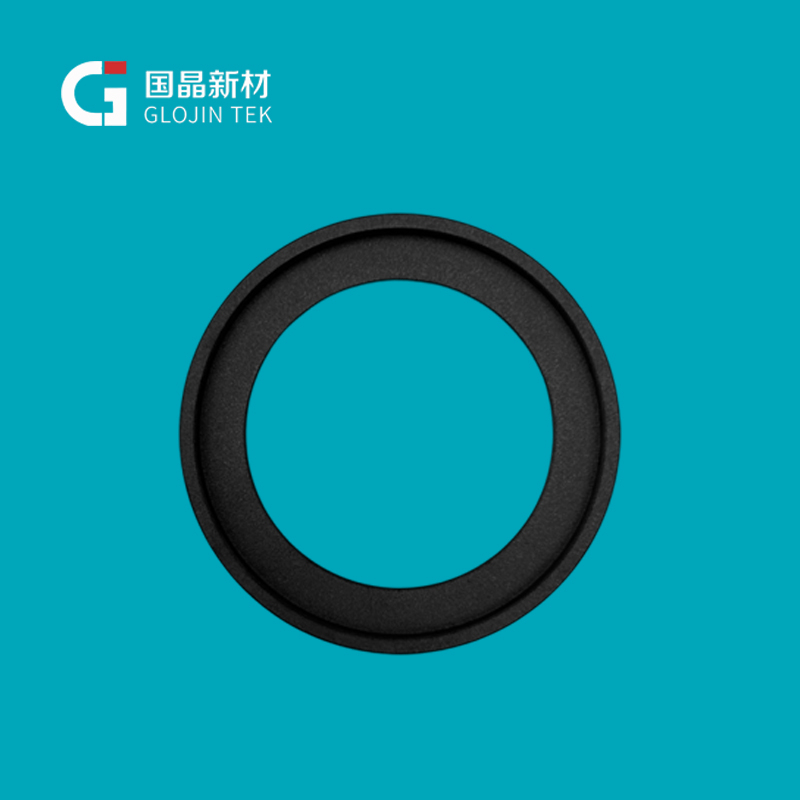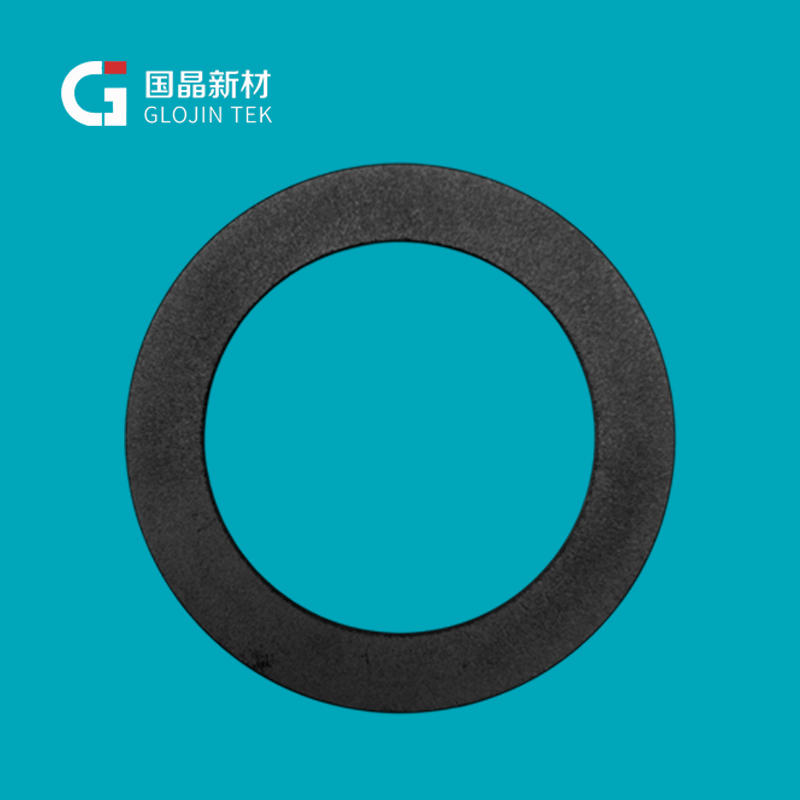
High Purity & Density: The CVD process enables precise control of composition and structure, making pyrolytic boron carbide far superior in purity and density to conventionally sintered/hot-pressed boron carbide.
Excellent Mechanical Properties: It is one of the hardest materials in nature, surpassed only by diamond and cubic boron nitride (CBN). The CVD pyrolysis process further optimizes its microstructure (e.g., fine grains, defect-free), enhancing its mechanical performance.
Outstanding High-Temperature Resistance & Thermal Stability: Its stable crystal structure (trigonal system) and dense microscopic morphology allow it to withstand extreme high-temperature environments.
Excellent Chemical Inertness: It exhibits extremely high chemical stability, offering outstanding resistance to most strong acids, strong alkalis, molten metals, and corrosive gases.
| Property | Unit | Value |
| Density | g/cm³ | 2.52 |
| Lattice Constant | Å | a=2.5, c=4.3 |
| Flexural Strength | MPa | 400 |
| Elastic Modulus | GPa | 450-470 |
| Thermal Conductivity | W/(m·K) | 42 |
| Coefficient of Thermal Expansion | mm/mm/K | 5×10⁻⁶ |
| Resistivity | Ω·cm | 0.1-10 |
| Vickers Hardness | GPa | 38 |
| Melting Point | °C | 2450 |
In plasma etching equipment, boron carbide has higher hardness and better corrosion resistance than silicon carbide, and thus can replace the application of silicon carbide etching rings in plasma etchers.
No. 88, Nanhuan East Road, Yucheng City, Shandong Province